
“Our self-image, strongly held, essentially determines what we become.”
- Maxwell Maltz
Self-image and self-esteem are strongly influenced by the kind and quality of thoughts we have about ourselves and how we reflect, appraise, and evaluate ourselves.
Self-reflection leads to self-awareness, which is a key element to developing leadership (self-directed or a leader of others), maturity, and emotional intelligence.
Being able to self-reflect in a healthy and productive manner is important, but carving out time to do so is where things can get tricky. Long-held theory states that self-reflection occupies roughly 50% of our waking life. However, self-reflection can happen unintentionally and one can be unaware of how they are analyzing and assessing themselves; this is a more inefficient manner of reflection because it can often lead to poor planning and flawed decision making.
Intentional self-reflection is much more efficient because we can analyze and assess “self” with more objective thinking and more easily seek outside solutions and help for whatever refinement or improvement we feel needs to occur in our lives.
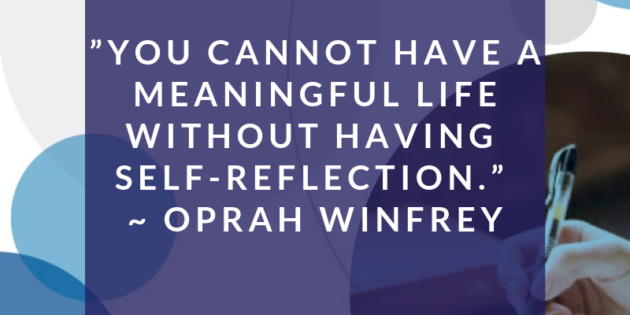
Many avoid and forgo self-reflection though avoidance—running from “self” through any sort of excessive activity (fill in the blank with: alcohol or other substances, food, church, sex, caregiving). Why would someone not want to engage in self-reflection? Fear is likely a motivating factor—fear of what you might uncover, fear of the unknown, fear of confrontation, fear of the potential of opening old wounds, fear of taking accountability, or fear of not being “good enough.”
Taking the time to reflect on self allows you to slow down amidst the busy-ness or chaos of life. It can help you bring some order to the disorder. If you’re a go-getter or feel the need to constantly be moving, self-reflection allows you to pause and recalibrate so that your future actions are more effective and efficient. When first becoming intentional about self-reflection it can be uncomfortable, you might not know how to go about it, or what you uncover might be painful. But intentionally reflecting on self over a period of time can lead to a sense of clarity on one’s direction in life as well as inner peace.
Some important questions to ask yourself when engaging in self-reflection:
- What can I improve upon in my life, by even a small percentage?
- What am I avoiding?
- How can I be more effective in my relationships?
- How can I love or care for myself (at all or even more than now)?
- What am I grateful for?
- Am I viewing my current circumstances with a healthy perspective?
- What do I need help with currently and what is keeping me from asking for help?
- Morning pages
- Constructive feedback
- Creating a personal manifesto
- Vision board
- Counseling therapy
- Monitoring your inner dialogue
- Personality tests

